


Process States in Operating System
Contents
Toggle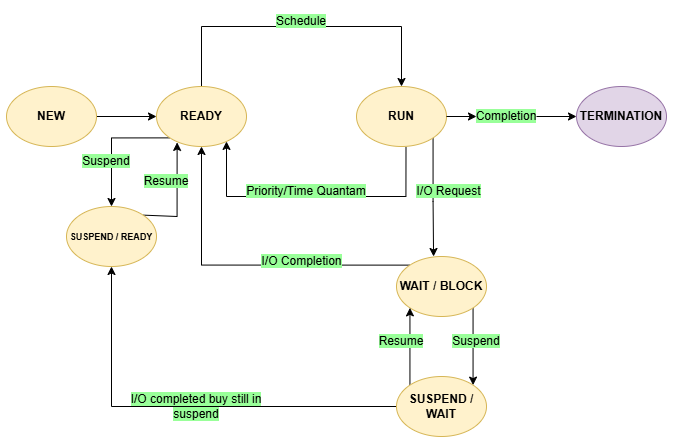
Process states means means the current activity of the process. When a process executes in an Operating system it changes its state.
New State: This is when the process is just being created—the OS sets up its PCB and allocates initial resources, but it’s not loaded into memory or ready to run yet. It stays here until resources are confirmed.
Ready State: The process is fully prepared and waiting in a queue for the CPU to become available. Everything’s set—memory allocated, no pending issues—but it hasn’t started executing instructions.
Running State: The process is actively using the CPU to execute its code. Only one process per CPU can be here at a time, and it might get interrupted for scheduling or events.
Waiting (or Blocked) State: The process pauses because it’s waiting for something external, like I/O completion, user input, or a resource release. It stays in memory but doesn’t use the CPU until the wait resolves.
Terminated State: The process has finished its job—the OS reclaims all resources, deletes the PCB, and removes it from the system. No more execution possible.
Suspended Ready State: Like ready, but the process is swapped out to disk to free RAM for others. It returns to ready when brought back into memory.
Suspended Waiting State: Similar to waiting, but paused on disk due to low memory. It moves to waiting once reloaded.