Combinational circuits are the backbone of digital electronics and computer systems. They are circuits whose outputs depend solely on the current inputs, without any stored memory. These circuits process binary data and enable core computer operations.
A combinational circuit is a setup of interconnected logic gates that has a set of inputs and a set of outputs. The output values depend only on the current combination of input values. The n input variables come from an external source, and the m output variables are sent to some external device. Between these inputs and outputs, the logic gates are connected in a way that performs a specific task. A combinational circuit takes binary information from its inputs and converts it into the required binary output. Such circuits are used in digital systems to make control decisions and to perform many of the data-processing operations inside computers.
Block Diagram of a combinational Circuit
A combinational circuit can be described using a truth table, which shows the relationship between all possible combinations of the n inputs and the corresponding m outputs. Since there are 2ⁿ possible input combinations, the table lists the output for each one. Another way to specify a combinational circuit is by writing m Boolean functions, one for every output. Each of these functions expresses the output in terms of the n input variables.
Brief History of Combinational Circuits
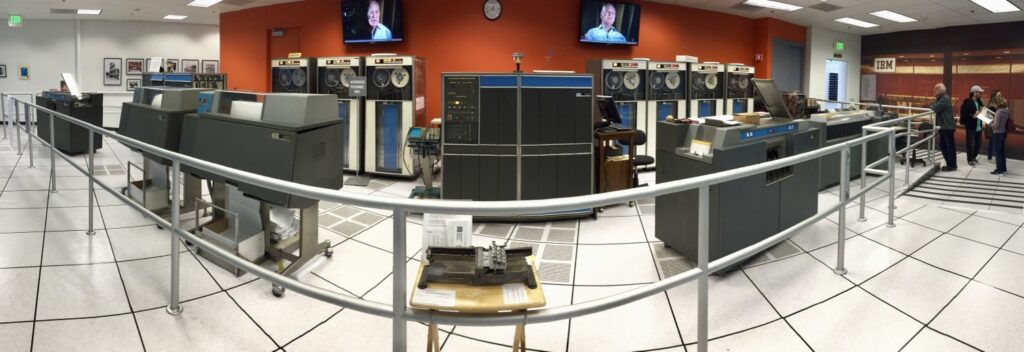
The roots of combinational circuits trace back to Boolean algebra introduced by George Boole in 1854, which mathematically modeled logic with binary variables. By the early 20th century, visionaries like Claude Shannon applied Boolean logic to switching circuits, marking the dawn of digital logic. Early devices used relays for AND/OR operations, evolving through vacuum tubes and eventually transistors in the mid-1900s. This transition enabled faster, more reliable combinational logic devices embedded in computers like the ENIAC and subsequent models.
Purpose of Combinational Circuits
Combinational circuits perform arithmetic calculations, data routing, code decoding, and decision-making using Boolean operations. Their output changes instantly with input, which is essential for rapid data processing in CPUs and ALUs. They are crucial because:
Predictable Outputs: Current inputs define output firmly, enabling design simplicity.
Speed: Memoryless nature avoids delays caused by feedback loops.
Building Blocks: Complex sequential circuits and processors build from these fundamental logic units.
Data Manipulation: Perform functions like addition, subtraction, multiplexing critical for computation.
Their memoryless behavior contrasts sequential circuits which depend on past inputs, making combinational logic better for instantaneous arithmetic and logical decisions.
Designing of a Combinational Circuit
Designing a combinational circuit begins with understanding the problem in words and ends with drawing the final logic diagram. The process typically follows these steps:
State the problem clearly. Identify what the circuit is supposed to do.
Assign letter symbols to all input and output variables. These symbols represent the binary signals the circuit will use.
Create the truth table. This table shows how every possible input combination leads to a specific output.
Simplify the Boolean expression for each output. Using Boolean algebra or Karnaugh maps, the functions are reduced to their simplest forms.
Draw the logic diagram. The final step is to convert the simplified expressions into a circuit of logic gates.
Types of Combinational Circuits
Basic Logic Gate Combinations
At the core are simple gates—AND, OR, NOT—which combine to implement functions.
Arithmetic Circuits
Half Adder: Adds two bits producing sum and carry.
Full Adder: Adds three bits, crucial for multi-bit addition.
Subtractors: Logic to compute difference between bits.
These arithmetic units form the ALU’s core.
Data Transfer and Conversion Circuits
Multiplexers (MUX): Select one of many inputs to output based on selector lines.
Demultiplexers (DEMUX): Routes input to one of many outputs.
Encoders: Converts 2^n inputs to n-bit code.
Decoders: Opposite of encoders, converts code input to multiple outputs.
These manage data movement inside computers efficiently.
Code Converters and Comparators
Translate data formats (binary to Gray code) and compare values for equality. These are used in digital communication and CPU control.
Conclusion
Combinational circuits transform binary inputs using Boolean logic gates to produce outputs instantly. They have evolved alongside computing technology from relay switches to sophisticated IC implementations. Their purpose of enabling complex data processing and routing is essential to computer functionality. Understanding their types, history, and operation lays a foundation for mastering digital systems design.
Spread your knowledgeEvolution of Computers The evolution of computers took five generations, from transforming room sized machines to AI-powered devices. […]